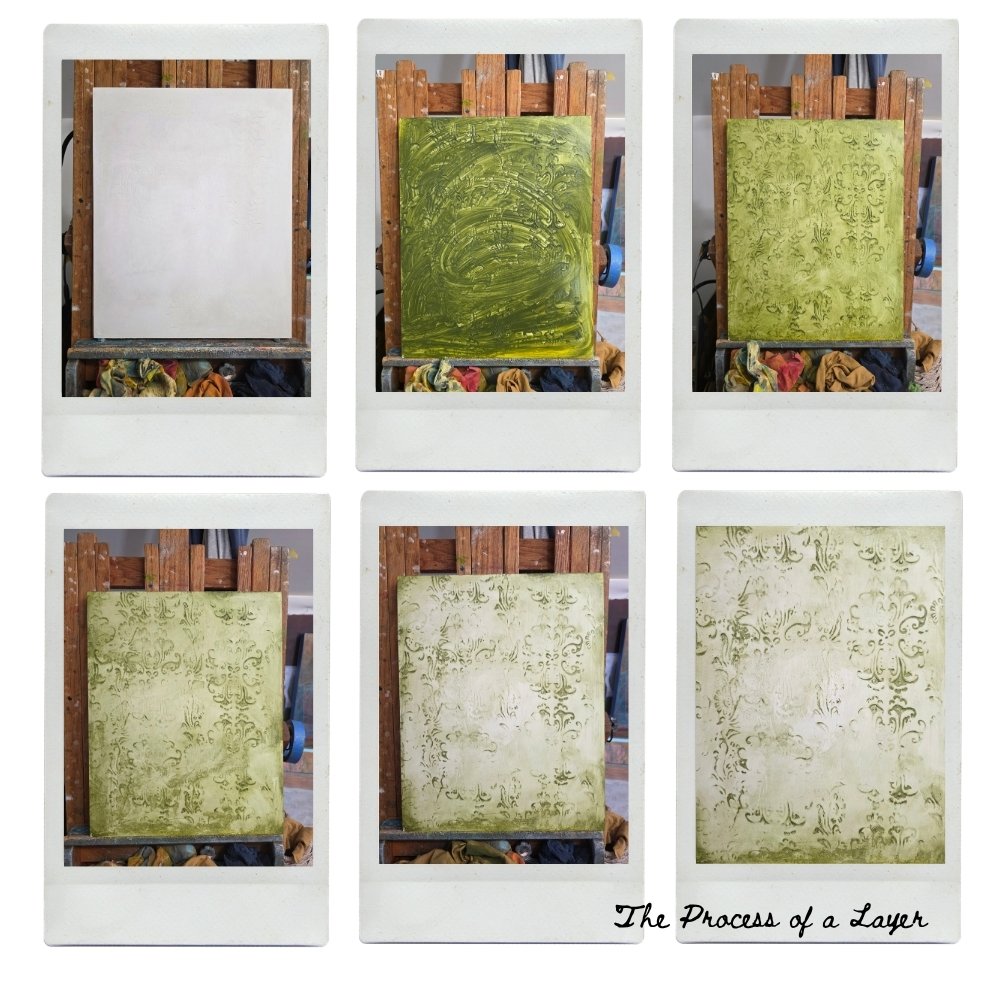
Ok, not really into actual Time Dilation (though that would be incredibly awesome), but into the process behind the paintings in my upcoming exhibition, Time Dilation. This post focuses on the technical process of a painting, next time I’ll be talking about the conceptual side of the exhibition.
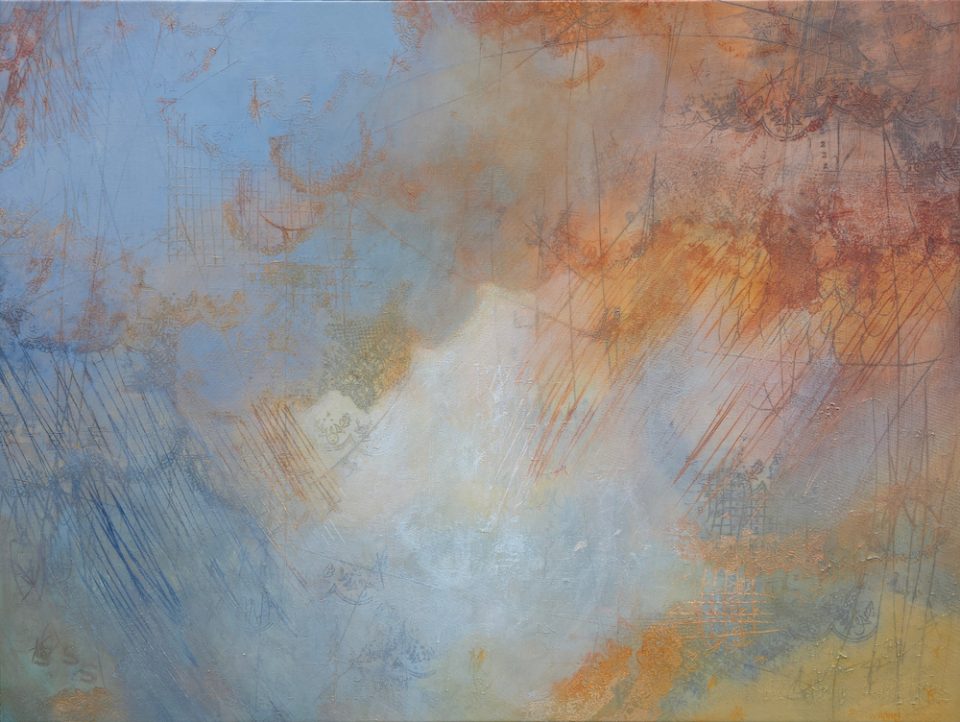
The paintings in this body of work are all acrylic paint and various mediums on wood or canvas. I use all kinds of acrylics, finding that different brands have different weights, pigmentation and leveling traits. I pretty much always use my mediums without paint added to them to create a transparent layer of some kind. If you are unfamiliar, some mediums (the ones I use) can be thought of as clear paint and come in lots of consistencies – from a heavy thick gel to a watery glaze. By alternating layers of paint and medium, I build up a painting that allows light to bounce below the surface, adding depth and color that does not appear to be acrylic paint. I have spent decades exploring and experimenting with this process and still find new things to learn about it every time I paint. I am delighted every time at what the paint can do and the little surprises that unfold.
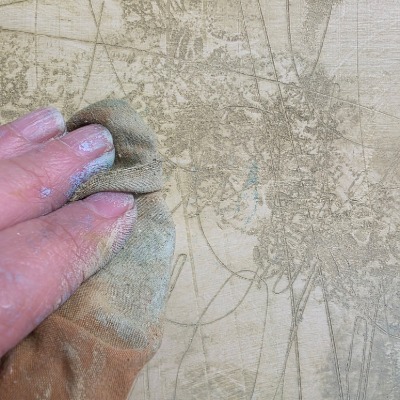
Within the transparent medium layers I etch lines and embed lettering or texture. This can be tricky because the layer is, after all, transparent. The marks remain difficult to see until the next layer, and vary in strength with the thickness of the medium. When this layer is dry I wipe paint into the recessed marks to create a translucent layer with the marks standing out. In this series I used several forms of pattern and texture, almost like the layering of wallpapers in an old house. The textures are from different time periods and places (one of the textures is from a lace linen given to me by my grandmother) These foundational layers form the background of the presence of time (namely the past) in each piece. Sometimes they are very prominent in the final surface and sometimes they are not, a nod to our perception of memory and the passage of time in life.
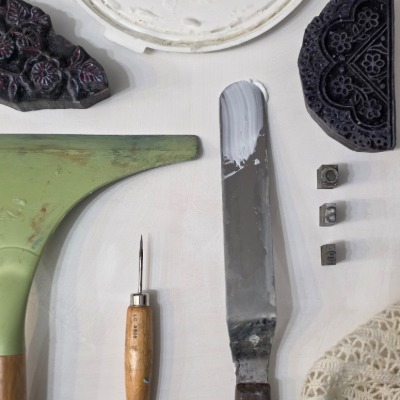
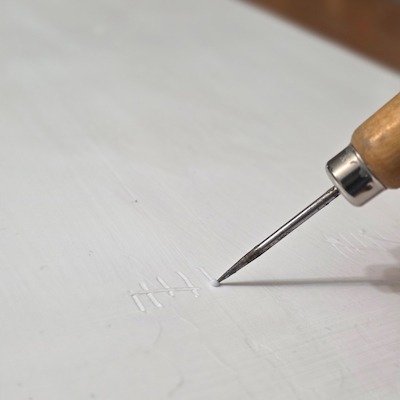
I make my drawing marks with one of my favorite etching tools. The fine, sharp point creates a consistently sharp line with a small burr to either side depending on the stroke. I am rarely interested in perfectly straight and clean lines so this works beautifully. It’s also a tool I’ve used my entire career and feels like an old friend. You’ll see my hand within several layers of a painting. My vocabulary of mark making has developed over decades with some forms remaining constant and some morphing over the years. My particular way of working creates a surface that shifts and changes as the light catches an embedded mark. Many times the marks will be nearly invisible from far across the room but as you come closer or the light falls across the surface it becomes alive.
One of my favorite parts of my painting process is wiping a color over a transparent layer. The surface goes from seemingly void of form to full of life and movement in a matter of moments. Wiping layers are extremely time sensitive (I’ve definitely ruined a few paintings before by being to slow) and takes practice to understand how the paint responds to the lower layers. Each color added must be considered, as it will relate to the colors beneath it, much like printmaking. The colors shift and change like light through a window throughout the afternoon.
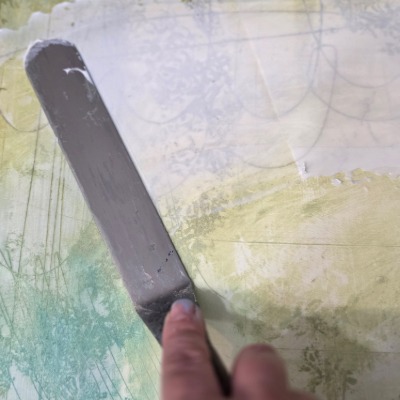
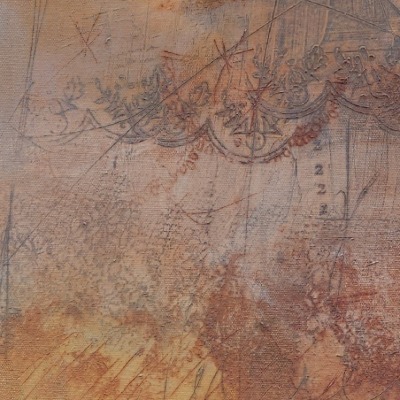
Often times a painting will go through so many transformations or color and composition during it’s creation, with some of the most beautiful interactions being obscured in the final piece. This, too, is a statement on time and its passing. We cannot always live in the moments of solid joy and beauty in our lives (if we did they would become meaningless) but they form deep recesses in us to build upon. And just like those moments, I’m a little sad and a little honored that I got to be a part of them before they ended. Being an artist means that your put so much of yourself on a wall for the world to see. It’s vulnerable and exposed. I like that in my work there is beauty that only I got to experience fully before it transformed into the final piece. Beauty unseen, but yet remains foundational to the final piece.
This was a beautiful testimony to time, patience, pause, and depth. I appreciate all the words you chose to describe your process. Clearly you approach each canvas with an eye for detail while highlighting the delicate nature of artistic expression. I am so excited to see this exhibition in person.
– Janine
I’m very excited to show this work, it has been a beautiful experience creating it. (And I’m even more excited to see you!)